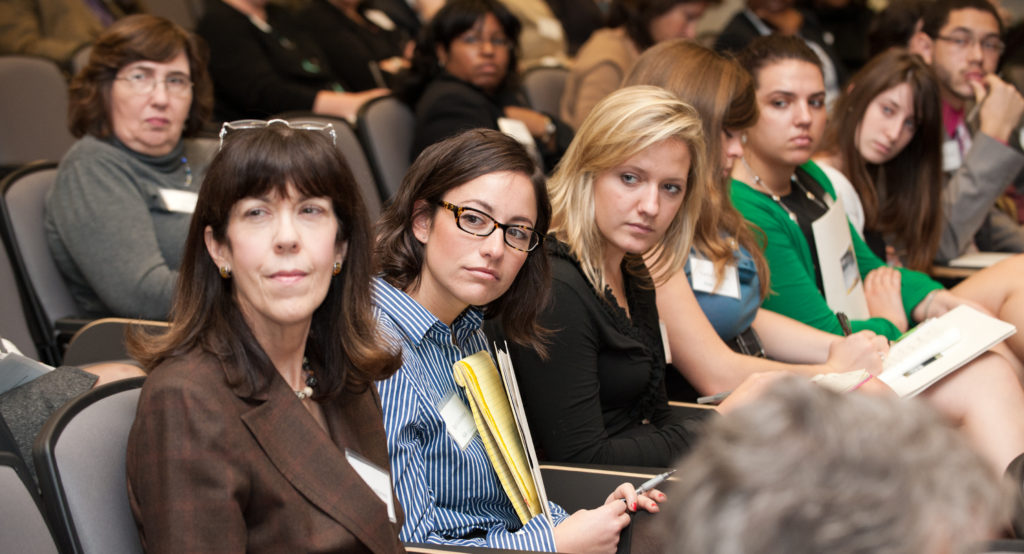
Part of the Stearns Center mission is to provide faculty with opportunities to connect with other faculty. Our workshops and events are always designed with community building in mind. In addition, we help support other kinds of faculty communities.
Teaching Squares are small, informal groups of faculty (usually 4-5 people) from multiple disciplines who exchange teaching information all around their “square.” The goal of a Teaching Square is to enable faculty to have productive conversations about teaching with colleagues whom they might otherwise not meet. Teaching Squares usually involve 2-3 meetings during a semester, though some Squares decide they want more!
If you sign up for a Teaching Square, Stearns Center will help connect you with colleagues and provide you some suggestions for getting started.
Faculty Learning Communities are mid-sized, formal groups of faculty (usually 10-20 people) who are investigating a question or working on a project together related to curriculum or pedagogy. They usually have co-facilitators who are faculty members, and often invite other community members to contribute in specific ways according to their expertise and interests. The goal of an FLC is to enable faculty to build networks and lasting communities in support of a project that improves teaching and learning in their academic area and/or at George Mason.
If you already facilitate a Faculty Learning Community, Stearns Center can help provide publicity and guidance. If you would like to start up an FLC, Stearns Center may be able to help there too. Depending on the year, we sometimes have funding to provide facilitator stipends and/or small grants to support purchases of materials.
Reading Groups are mid- to large-sized groups of faculty (often 10-30 people) who take up a reading project related to teaching and learning. Synchronous reading groups have 3-5 meetings per semester, to discuss different articles or chapters of a book; asynchronous reading groups use online discussions. Depending on the project, Stearns Center may provide copies of the selected book, facilitator support, and/or other networking options.
Watch our newsletter for invitations to any upcoming Reading Groups.